
A win for Glynn.
PROTECTED CONTENT
If you’re a current subscriber, log in below. If you would like to subscribe, please click the subscribe tab above.
Username and Password Help
Please enter your email and we will send you a password reset link.
By Pamela Permar-Shierling
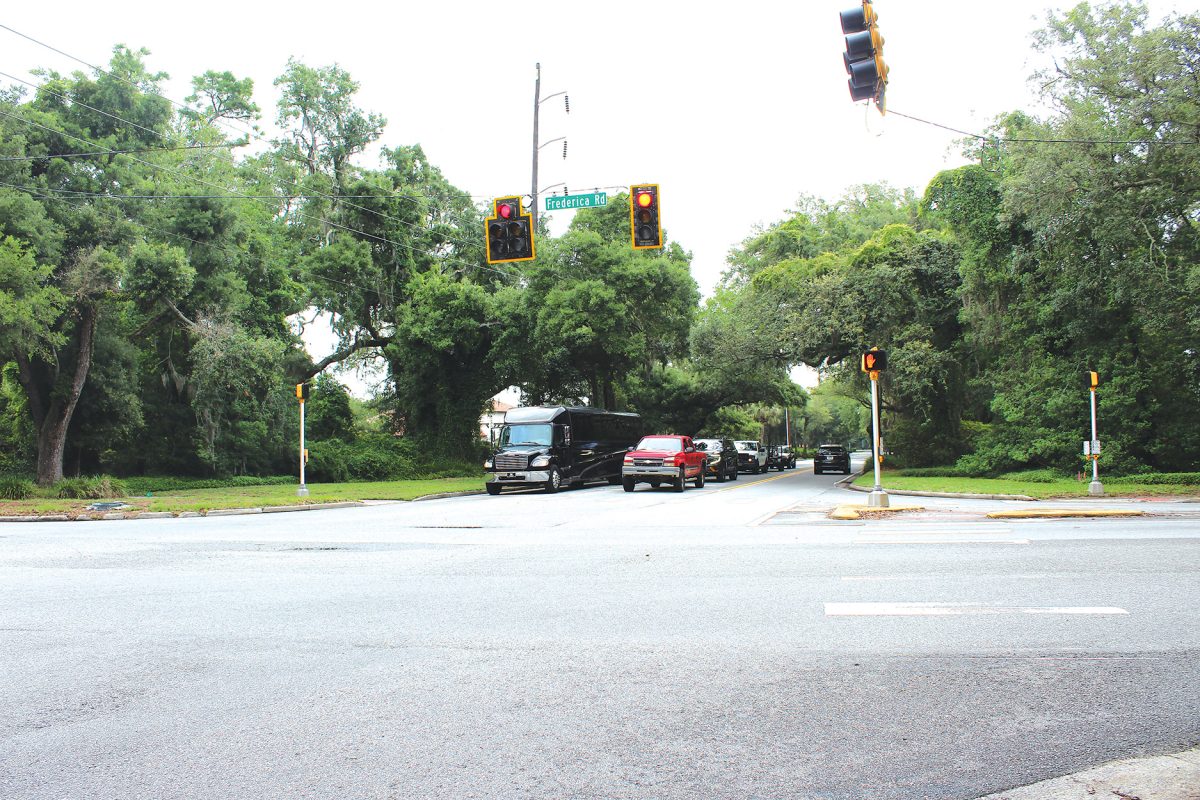
A May 21 ruling by Glynn County Superior Court Judge Stephen Kelley paves the way for Glynn County to continue its plans for the Frederica Road / Sea Island Road intersection roundabout.
In 2025 Glynn Environmental Coalition and Jane Fraser filed a petition in Glynn County Superior Court naming the defendants as SIA Propco II LLC, Glynn County and John and Jane Does, and contending that “Glynn County, the current owner of Twitty Park, is now in contempt of the Court’s 2019 Order for its ongoing efforts to construct a roundabout and other roadworks at the corner of Sea Island Road and Frederica Road, which, they claim, would encroach on forty percent of Twitty Park’s total acreage.”
Background of Twitty Park deed transactions
• In 1924, T.L. Cain deeded to Glynn County two tracts of real property situated at the intersection of Frederica Road and Sea Island Road, commonly known as “Twitty Park.”
The first tract was conveyed for the purpose of a right of way for a road from St. Simons to Sea Island; and the second tract was conveyed for the purpose of a public park.
The deed also stated that if the lands should ever cease to be used for such purpose then the title would revert to the first party.
• In 1958 a road bisecting Twitty Park was built which eliminated the two separate roads bordering the park.
• In 1981 the county expanded the Frederica Road right of way
• In 1982 Glynn County deeded the property to the Sea Island Company along with the deed restrictions.
• In 2010 the Sea Island Company transferred its interest in the property to Sea Island Acquisition.
• In 2014 Sea Island Acquisition deeded the property to SIA Propco II LLC.
Through all these transfers Twitty remained a public park.
• In a 2016 a law suit was filed opposing SIA’s intent to transfer the property back to Glynn County.
The suit asked the court to declare that Glynn County’s actions transferring Twitty Park to Sea Island Company in 1982 were void; issue an order prohibiting the County from abandoning the park absent special legislation from the Georgia General Assembly and a referendum from Glynn County residents; that the portions of Twitty Park earlier developed as Sea Island Road and Frederica Road revert back to Plaintiffs; and a writ of mandamus directing the County to hold and maintain Twitty Park as a public park and prohibiting the County from developing the park for any other use.
On April 29, 2019, a Final Order addressing these 2016 claims was issued by the Court.
The court ruled that Glynn County did not violate the terms of the Cain deed by building a road bisecting Twitty Park. The Court also declined to issue an order of mandamus compelling the county to hold and maintain the property as a public park.
This decision was not appealed by either party.
When Judge Kelley rendered his recent decision he found that Glynn County was not in contempt of the 2019 order “because it imposed no duty or prohibition upon the County with respect to its use of Twitty Park in public trust, the Court cannot find that Glynn County’s execution of the Utility Relocation Agreement with Georgia Power Company or its plans for a roundabout project at the intersection of Frederica and Sea Island Roads, as currently formulated, violates that Order and, therefore; Plaintiffs have not demonstrated that Glynn County is in willful contempt.”
Plaintiffs’ Motion for contempt was denied.
Glynn County Board of Commissioners Chairman Wayne Neal said, “Glynn County has successfully defended yet another legal challenge, the latest in a series of unsuccessful lawsuits and legal challenges brought against the county over an extended period of time.
“These matters have required the use of significant public funds and County resources. We remain committed to protecting our taxpayers, upholding the law, and ensuring that County operations and the essential public services that support our citizens and community are not unnecessarily disrupted by this type of repeated litigation.”


This is in no way “a win for Glynn.” Please get your reporting correct. Your article misrepresented Judge Kelley’s ruling.
Judge Kelley’s ruling only stated a contempt filing was incorrect to keep the 2019 ruling in place. The Judge in no way stated that the roundabout was legal, and did not give the green light to begin bulldozing old canopy trees, and laying asphalt. If you want an environmental and traffic hazard you will certainly receive it when the roundabout construction begins. I am positive that Glynn county residence do not want that.
Please add to the last statement, Signed, an heir of TL Cain who donated the beautiful land that is Twitty Park to the citizens of Glynn County in 1924 to live on in perpetuity as a public green space.